Trump Launches 'Board of Peace' at Davos, Expands Gaza Plan Amid Allies' Reservations
President Trump signed the Board of Peace charter in Davos, expanding a Gaza reconstruction plan; some allies abstained amid concerns it could sideline the UN.
 NBC News
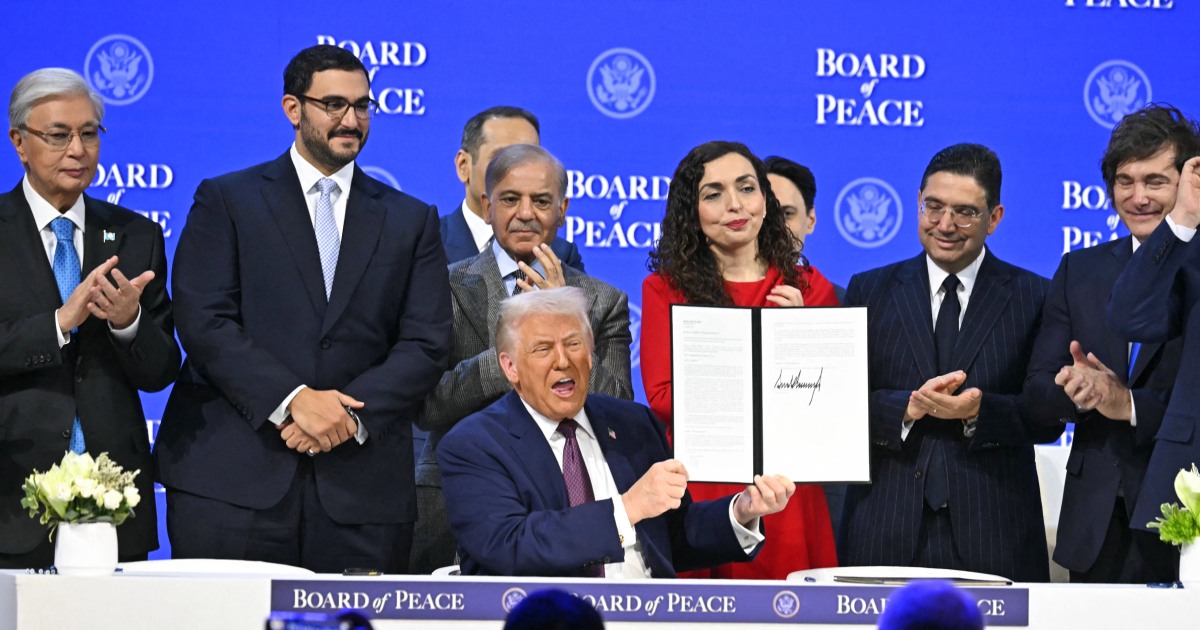
What to know about Trump's 'Board of Peace': Which countries are involved, cost and more
 Daily Beast
Trump, 79, Labels Peace ‘Destructive’ in Bizarre Comments
 PBS NewsHour
Trump unveils his vision to rebuild Gaza into a seaside metropolis
 Washington Examiner
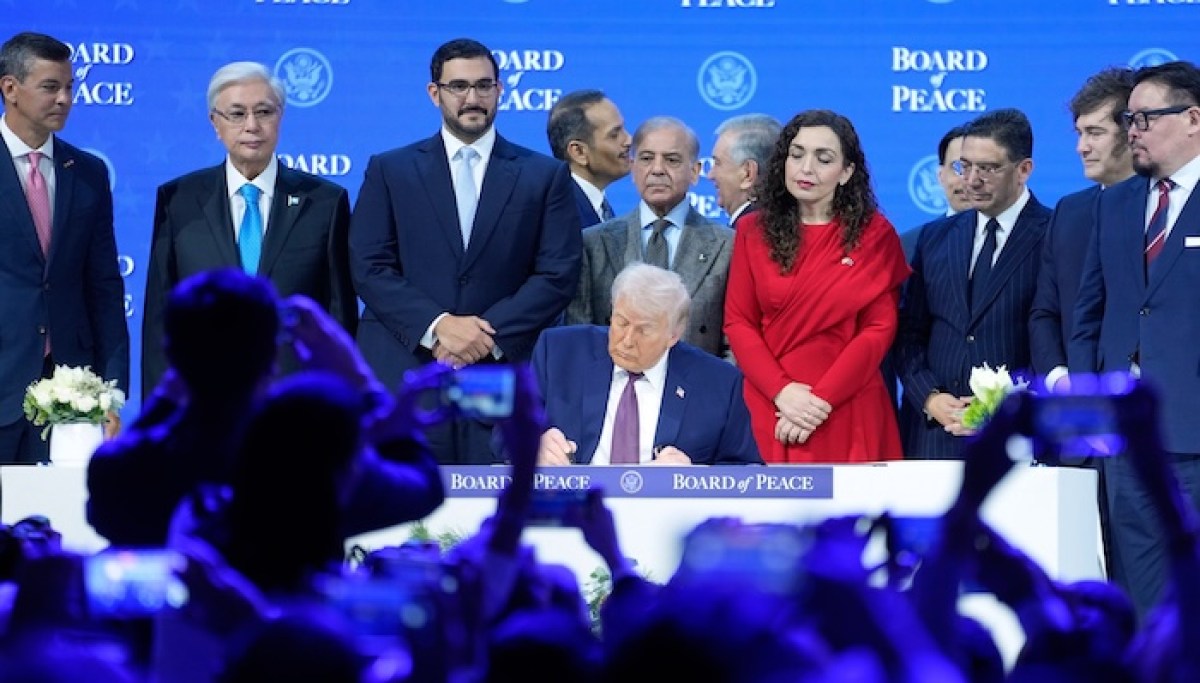
Hamas demilitarization still threatens success of 'Board of Peace'
Overview
At the World Economic Forum in Davos Thursday, President Trump signed the Board of Peace charter, joined by leaders from about 20 countries to oversee Gaza stabilization and other conflicts.
The charter grants the board a broad mandate to promote stability and governance; it names Trump chairman and allows removal only by unanimous Executive Board vote or voluntary resignation.
More than 20 countries reportedly pledged to join; the charter offers permanent membership to contributors exceeding $1 billion—a point the White House later characterized as not a minimum fee to join.
Jared Kushner unveiled a $25 billion Gaza redevelopment vision—coastal towers, 100,000 housing units, port and airport—while critics noted no Gazan representatives on the board and unclear implementation details.
Major Western allies including the U.K. and France publicly declined or expressed reservations, citing concerns the new body might overlap with or undermine the United Nations' role.
Analysis
Center-leaning sources frame the Board of Peace as a controversial, personality-driven initiative lacking broad allied support, emphasizing concerns about legitimacy and UN‑undermining. They highlight absent Western signatories, quote skeptical leaders (Macron, U.K.), and foreground charter clauses (chairman protections, $1B exception), which collectively cast doubt on its inclusivity and governance.
FAQ
The Board of Peace is an international body signed at Davos to oversee Gaza stabilization, reconstruction, and governance in conflicts, with President Trump as chairman, removable only by unanimous Executive Board vote or resignation.
The plan includes phased development starting from Rafah with over 100,000 housing units, coastal towers, a new port, airport, rail lines, industrial zones, data centers, and aims to create 500,000 jobs, raise GDP to $10 billion, with initial focus on aid and rubble removal in 100 days.
More than 20 countries pledged to join, with permanent membership for contributors exceeding $1 billion, though the White House clarified it is not a minimum fee; specific countries beyond allies like the U.S. and Israel are not detailed.
The U.K. and France declined or expressed reservations, concerned that the board could overlap with or undermine the United Nations' role in Gaza.
Kushner suggested construction in two or three years across four phases from Rafah to Gaza City; the next 100 days focus on humanitarian aid, infrastructure rehab, hospital and bakery fixes, and rubble removal per the January 19, 2025 agreement.

