Israeli Airstrikes Kill 11–12 Across Gaza Ahead Of Peace Board Meeting
Airstrikes killed 11–12 people across Gaza as the Board of Peace prepares its first meeting in Washington on 19 February, officials and health sources said.




Overview
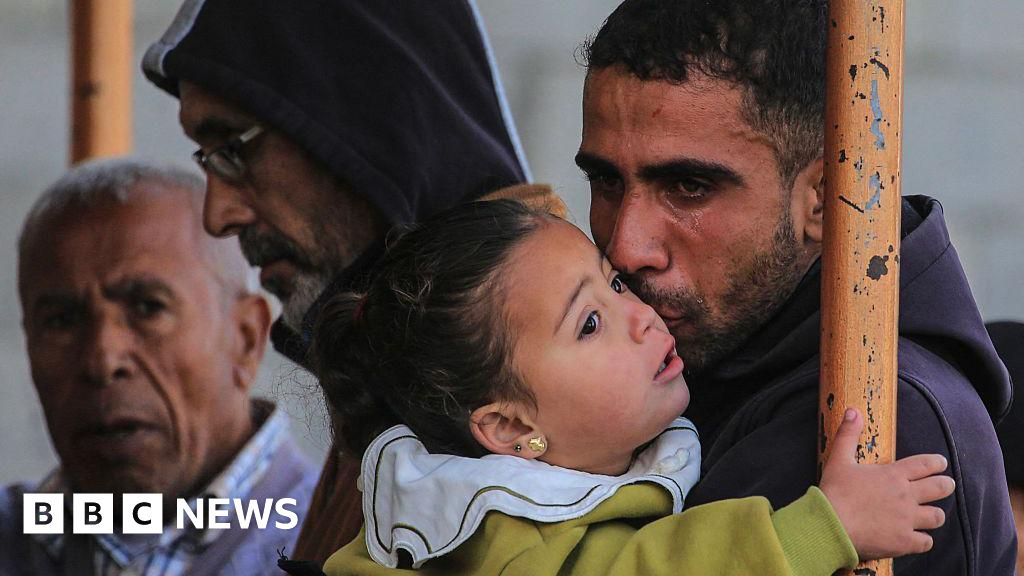
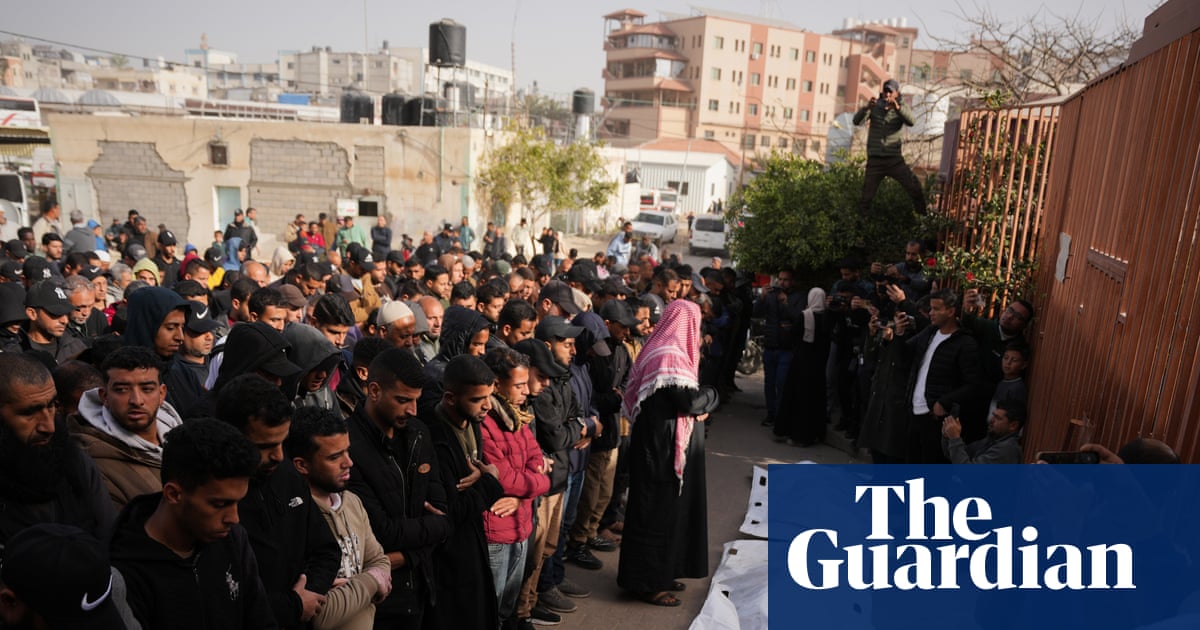
Israeli strikes killed 11 to 12 people across the Gaza Strip on Sunday, Palestinian civil defence and hospital officials said.
The Israel Defense Forces said it struck terror targets in response to ceasefire violations after militants emerged from a tunnel near Israeli-controlled positions.
Hazem Qassem, a Hamas spokesperson, condemned the strikes as a "new massacre" and urged the Board of Peace to pressure Israel to stop ceasefire violations.
Gaza's health ministry said roughly 600 to 601 people have been killed since the ceasefire took effect on 10 October.
The Board of Peace is due to hold its first meeting in Washington on 19 February.
Analysis
Center-leaning sources present this story neutrally, attributing casualty counts and claims to named organizations (Gaza Civil Defence, Gaza health ministry, IDF) and balancing accusations of ceasefire violations. They avoid loaded language, provide background on the October attack and diplomatic efforts, and clearly attribute disputed figures to sources.
FAQ
The Board of Peace is an international organization established by President Trump in January 2026, tasked with overseeing the Gaza peace plan and promoting peacekeeping globally. It consists of 28 member countries and is formally named in United Nations Security Council Resolution 2803. Its primary objectives include supervising the execution of the Gaza ceasefire, facilitating governance and reconstruction efforts, and dismantling Hamas military infrastructure. The board will announce $5 billion in pledges for Gaza reconstruction at its first meeting on February 19.
Prime Minister Benjamin Netanyahu has decided not to attend the February 19 meeting in person, instead sending Foreign Minister Gideon Sa'ar to represent Israel. Netanyahu was in Washington last week for separate meetings with President Trump but opted not to return for the Board of Peace gathering or AIPAC's annual conference[4]. However, Netanyahu has accepted Trump's offer for Israel to join the board, though he has not yet formally signed the charter[1].
Many Western allies have declined to join the Board of Peace, viewing it with significant skepticism. Their concerns include the extensive powers granted to the board and the exclusive veto authority held by Trump over its resolutions. Some allies perceive the board as an attempt by Trump to establish a rival to the UN Security Council[1].
Gaza's health ministry reported that approximately 600 to 601 people have been killed since the ceasefire took effect on October 10, 2025, indicating that violence has persisted despite the truce. The second phase of the ceasefire agreement requires Israeli forces to gradually withdraw from Gaza and Hamas to disarm, with an international stabilization force deployed to ensure security[4]. Indonesia has pledged to deploy up to 8,000 troops by the end of June as part of this stabilization effort[3].
The United States is hoping to announce approximately $1.25 billion in donations from the United Arab Emirates, Qatar, and Kuwait, with the U.S. also planning a similar donation[4]. President Trump announced that Board of Peace members have collectively pledged $5 billion toward rebuilding Gaza, with these commitments to be formally announced at the February 19 meeting[3].