U.S. and Iran Resume Geneva Nuclear Talks Amid Military Buildup
Second round in Geneva occurs as U.S. ships arrive and Iran stages Strait of Hormuz drills, with diplomats meeting the U.N. watchdog and regional ultimatums complicating outcomes.



Overview
The U.S. and Iran are expected to hold a second round of talks Tuesday in Geneva about Iran's nuclear program.
The talks come as the U.S. has sent the USS Gerald R. Ford to the Middle East and Iran's Revolutionary Guard began drills in the Strait of Hormuz and nearby waters.
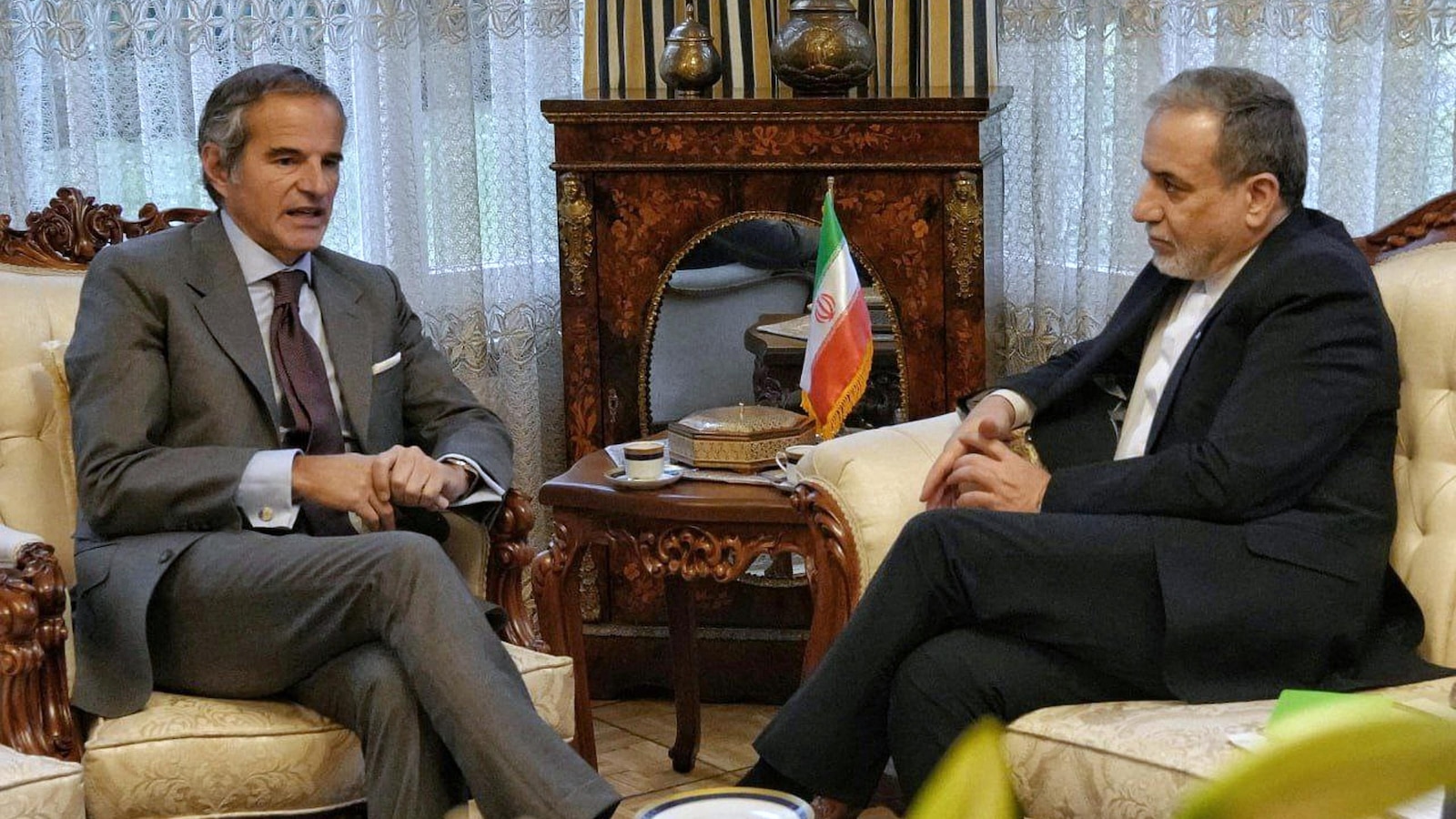
Iranian Foreign Minister Abbas Araghchi met Monday with the head of the U.N. nuclear watchdog in Geneva and wrote on X that he brought 'real ideas' for a fair and equitable deal.
The drill covered waterways through which 20% of the world's oil passes.
Israel has given Hamas 60 days to disarm, including turning over some 60,000 AK-47s, and warned full-scale war will resume if it refuses, officials said.
Analysis
Center-leaning sources frame the talks as precarious by juxtaposing U.S. military buildup and Iranian drills, using evaluative terms ('deadly crackdown', 'punishing sanctions') and privileging official statements over grassroots voices. Quote selection emphasizes threats and toughness, and the opening structure stresses security escalation, tilting coverage toward an imminent-conflict narrative.
FAQ
As of late 2024, Iran has enriched uranium to 60 percent, a level close to weapons-grade with no practical civilian application.[1] Iran can currently produce enough weapons-grade uranium for 5-6 bombs in less than two weeks.[1] Iran announced plans in late 2024 to further expand its enrichment program, including installing 32 additional centrifuge cascades and increasing 60 percent uranium production at the Fordow facility from 4.7 kilograms per month to 37 kilograms per month.[1]
Key disagreements include Iran's enriched uranium stockpile, with the U.S. insisting it be transferred to a third country while Iran wants to retain it domestically.[2] Additionally, the U.S. administration maintains that any deal would prohibit uranium enrichment, but Khamenei has stated that uranium enrichment is central to Iran's nuclear program and rejected U.S. demands to halt it.[2] Iran also seeks guarantees to protect itself if the U.S. withdraws from or violates any agreement.[2]
The U.S. Intelligence Community continues to assess that Iran is not currently building a nuclear weapon, but warned in November 2024 that Iran's nuclear activities 'better position it to produce' nuclear weapons 'if it so chooses.'[1] The assessment also noted that Iran continues to 'publicly discuss the utility of nuclear weapons.'[1]
Some Iranian regime officials have suggested that Iran may be willing to dilute its enriched uranium from 60 percent to 20 percent, but only under certain conditions.[4] However, Supreme Leader Khamenei has stated that uranium enrichment is central to Iran's nuclear program and rejected U.S. demands to halt it entirely.[2]
Iran is continuing to develop the unfinished Arak reactor based on modifications agreed to in the JCPOA.[1] However, the revised reactor design reduces plutonium production, and combined with ongoing IAEA monitoring, it effectively blocks the plutonium pathway for nuclear weapons.[1]