Police Probe After Bernini Elephant Loses Tusk Tip Again
Police found an 11-centimeter marble fragment and said it was a 1977 restoration piece; security cameras are being reviewed to find who, if anyone, broke it off.

 Daily Beast
Single Moms Over 40 Double as Solo Births Rise in U.S.
 ABC News
Police on the case: How Rome's beloved Bernini elephant sculpture lost the tip of its tusk — again
 Daily Beast
Passengers Stuck on 14-Hour Flight to Nowhere After Engine Scare
 Daily Beast
Intense Clip Shows Moment Skiers Are Smothered by Avalanche
Overview
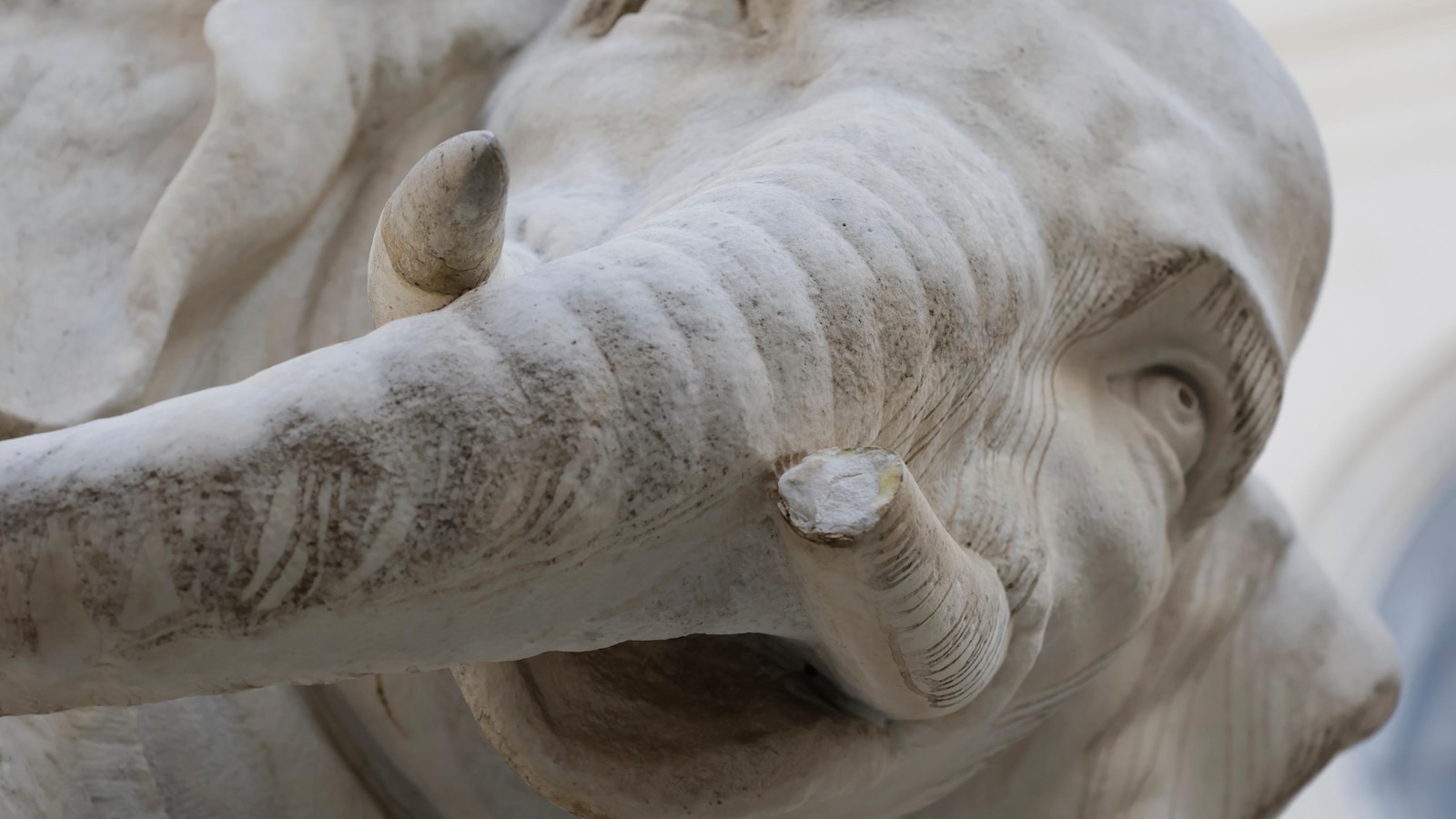
Italian police opened an investigation after finding the tip of the Bernini elephant's left tusk near the statue over the weekend.
Authorities said on Wednesday the 11-centimeter (4-inch) marble fragment was not original to Bernini and had been added during restoration work in 1977.
Rome city hall said the same tusk tip previously broke off in a 2016 act of vandalism, and police are reviewing security-camera footage to identify anyone responsible this time.
The stocky elephant sculpture stands in Piazza della Minerva near the Pantheon and was commissioned by Pope Alexander VII and designed by Gian Lorenzo Bernini to carry an Egyptian obelisk.
Investigators said they have the fragment in hand and are reviewing footage as they seek to determine how the tusk came off again.
Analysis
Center-leaning sources present the story neutrally: they stick to factual details, police actions, and historical context without partisan language or selective omission. Examples include reporting the 11-centimeter fragment, noting the 1977 restoration and 2016 vandalism, and adding benign historical anecdotes (the “Minerva’s Piglet” legend) as background, not judgment.
FAQ
The sculpture, created in 1667 by Ercole Ferrata based on Gian Lorenzo Bernini's design, stands in Piazza della Minerva near the Pantheon and was commissioned by Pope Alexander VII to support an Egyptian obelisk that had been discovered during excavations of Roman ruins.[1][2] The Latin inscription on the pedestal reads: 'Let any beholder of the carved images of the wisdom of Egypt on the obelisk carried by the elephant, the strongest of beasts, realize that it takes a robust mind to carry solid wisdom.'[6] The sculpture, popularly known as the Elefantino, has become one of Rome's most beloved and iconic monuments.[4]
Yes, the same left tusk tip was previously broken off on November 15, 2016, in an act of vandalism.[3][4] During that incident, the broken piece was found and reattached during restoration work, reinforced with wooden splints at a cost of approximately €2,000.[5] The tusk tip that broke off in the recent incident was determined to be the piece that was added during restoration work in 1977, not original to Bernini's work.[4]
Italy's Culture Minister Alessandro Giuli described the incident as an 'absurd act of barbarity,' stating that it is 'unacceptable that once again the nation's artistic and cultural heritage must suffer such serious damage.'[3] Rome's newly-elected Mayor Virginia Raggi emphasized that 'the protection of the city's heritage is crucial' and expressed concern that the city has become a repeated target, noting damage to multiple important monuments including the Barcaccia fountain in 2015.
Police are reviewing security camera footage from Piazza della Minerva and nearby areas to determine whether the tusk was deliberately vandalized or broke off naturally, particularly given recent weeks of unusually heavy rains.[3] The 11-centimeter marble fragment was recovered near the statue over the weekend, and investigators have the piece in hand as they continue their investigation.[4]
While the search results do not provide a comprehensive explanation for the pattern, they note that this is the second incident involving a Bernini work, as Dutch football fans damaged the Barcaccia fountain (designed by Bernini's father, Pietro) in 2015.[2] Mayor Raggi characterized the recurring damage as a serious problem affecting multiple important monuments, suggesting systemic challenges in protecting Rome's cultural heritage, though specific causes or prevention measures are not detailed in the available information.[2]