Ex-President Yoon Sentenced To Life Over Martial Law
A Seoul court found former President Yoon Suk Yeol guilty of rebellion for his Dec. 3, 2024 martial law order, a ruling that follows multiple related trials and convictions of top officials.
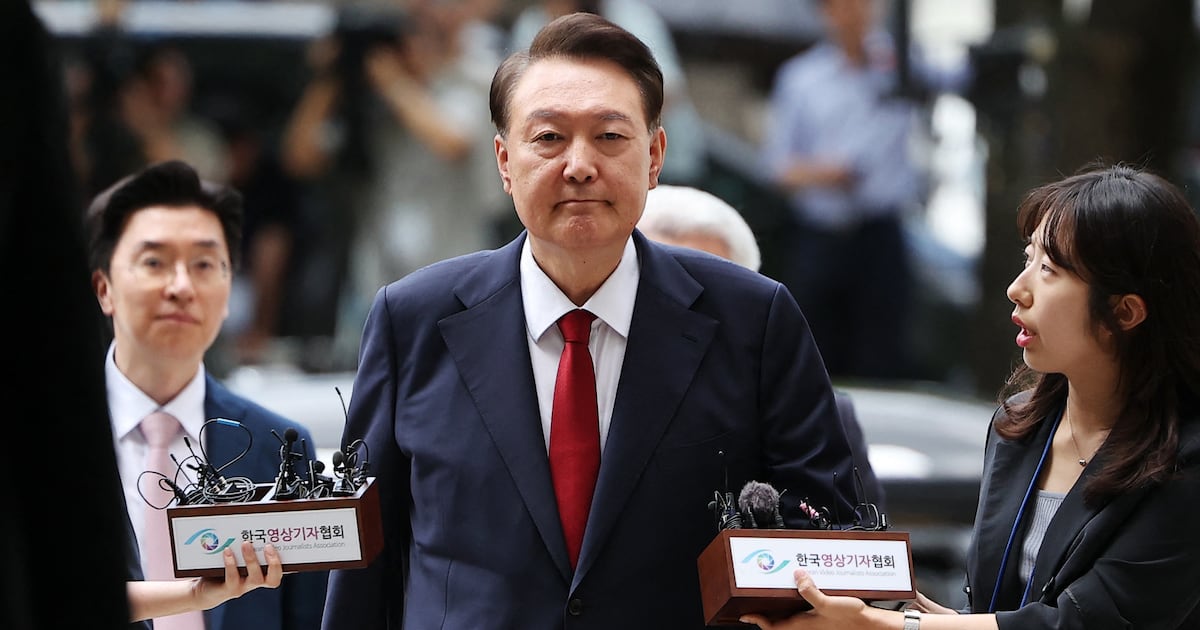
 Daily Beast
Ousted South Korean Leader Slapped With Life Sentence for Insurrection
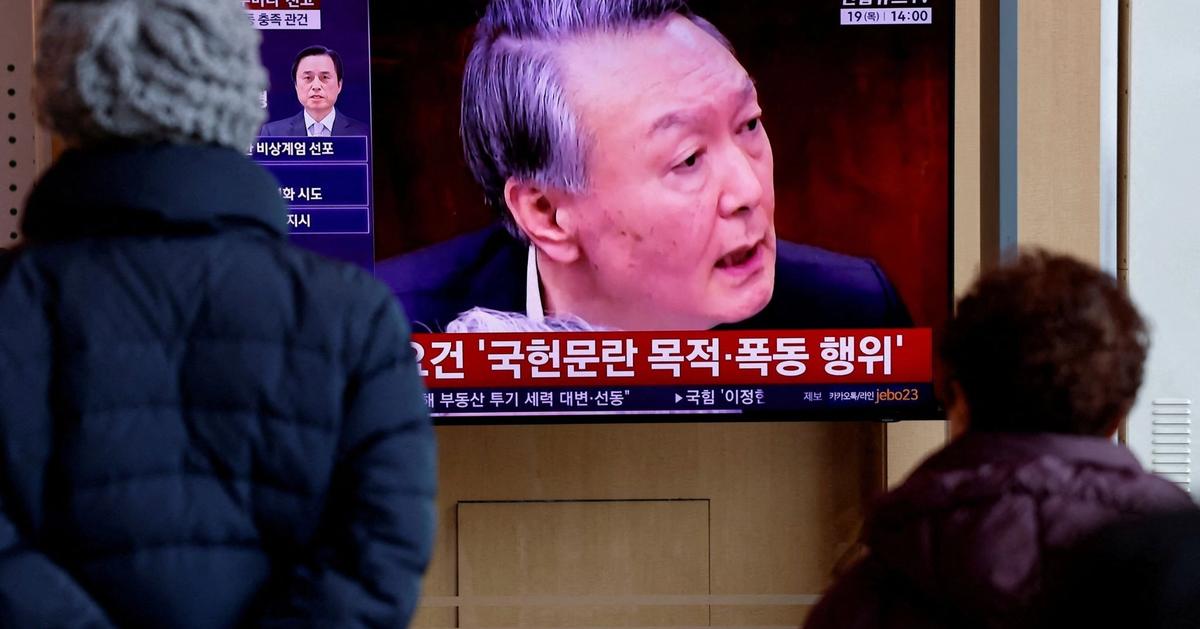
 Semafor
Former South Korean president Yoon Suk Yeol jailed for life
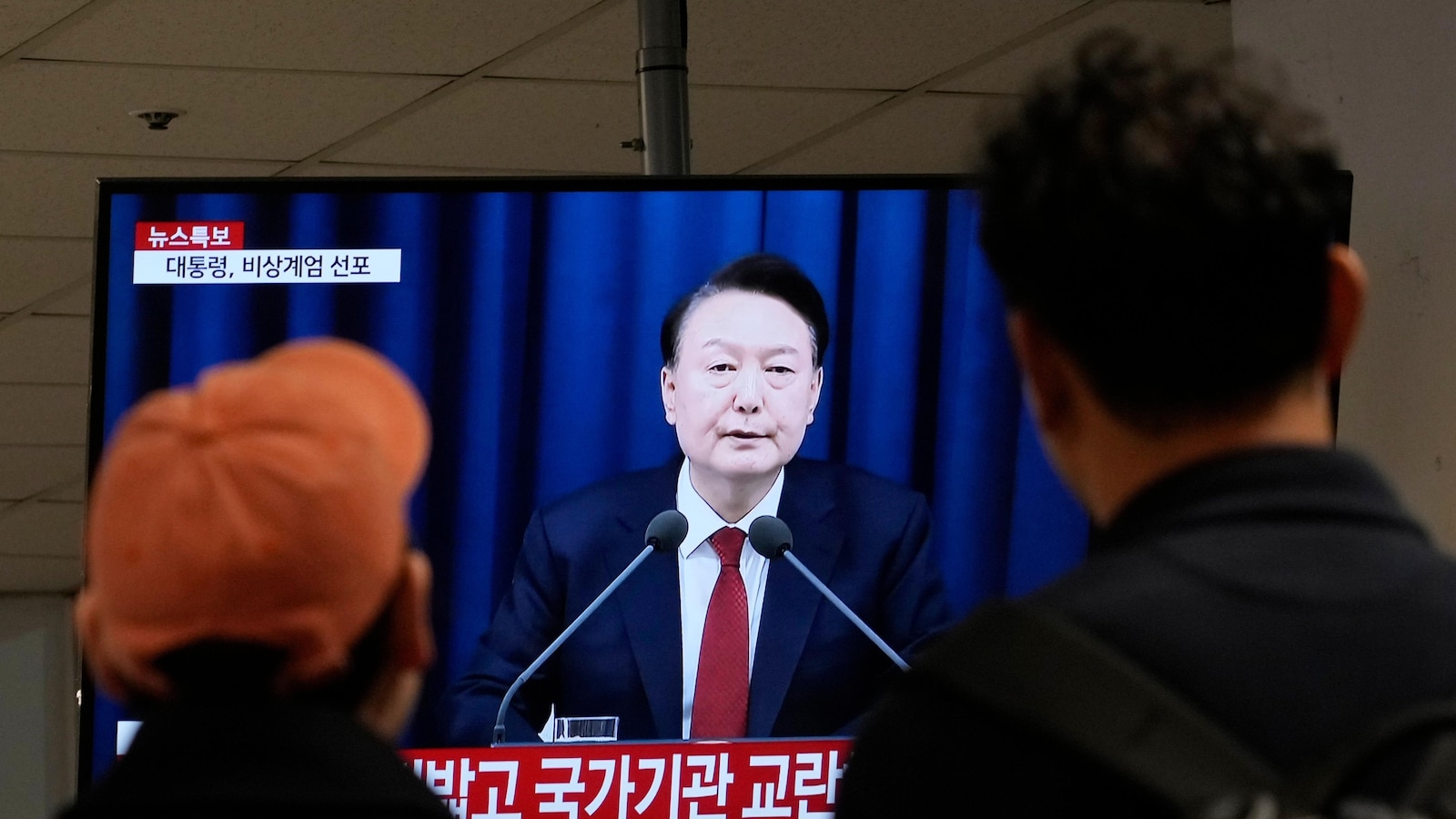
 ABC News
A look at events that led to ex-S. Korean president's conviction over martial law
 Associated Press
A look at major events that led to ex-South Korean president's conviction over martial law
Overview
A Seoul court on Feb. 19 sentenced former President Yoon Suk Yeol to life in prison for rebellion over his Dec. 3, 2024 imposition of martial law, the court said.
On Dec. 3, 2024 Yoon declared martial law, mobilizing troops and police to surround the National Assembly and issuing a decree that was lifted after about six hours, prosecutors and court records show.
Prosecutors detained and later arrested former Defense Minister Kim Yong Hyun, anti-corruption investigators and police raided the presidential compound and detained Yoon, and supporters rioted outside the court with about 90 arrests, officials said.
The National Assembly impeached Yoon on a 204-85 vote and the Constitutional Court removed him, prompting a June 3 election, while courts sentenced Kim Yong Hyun to 30 years and Han Duck-soo to 23 years.
Yoon's lawyers said they would discuss whether to appeal and warned that if appealed the case could take months to be finalized at the Supreme Court, his legal team said.
Analysis
Center-leaning sources frame the story as a condemnation of Yoon’s actions, emphasizing rebellion and threat to democracy. Editorial choices use loaded terms ("insurrection," "power grab"), prioritize prosecutors', judges' accounts and historical comparisons to past dictators, highlight troop deployments and unrest, while defense statements are included but often marginalized as denials.
FAQ
President Yoon declared emergency martial law on December 3, 2024, mobilizing troops and police to surround the National Assembly and issuing a decree that sought to ban political and parliamentary activity and control the media.[1][2] The martial law allowed for arrest and search without warrant, and restriction of freedom of speech, press, assembly, and association.[3] The decree was lifted after approximately six hours following a unanimous rejection by 190 members of the National Assembly.[2]
President Yoon cited the need to protect South Korea from 'North Korean communist forces' and 'antistate forces,' and to 'rebuild and protect' the country from 'falling into ruin.'[1] Officials later indicated his frustration with obstruction by the opposition Democratic Party, which had repeatedly blocked his domestic and foreign policy initiatives, including a reduction of the government's budget and impeachment proceedings against key officials.
Yoon declared martial law at 10:30 p.m. on December 3, 2024, and lifted it at 2:30 a.m. on December 4 after the National Assembly voted to demand its lifting.[3] The National Assembly impeached Yoon on December 14, 2024, suspending him from duties, and the Constitutional Court subsequently removed him from office.[3] Prosecutors indicted Yoon on charges of leading an insurrection, and on February 19, 2026, a Seoul court sentenced him to life in prison for rebellion.
Yoon was indicted on charges of leading an insurrection, an unprecedented charge for a South Korean president.[4] Insurrection is one of the few criminal charges from which a South Korean president does not have immunity and is punishable by life imprisonment or death, although South Korea has not executed anyone in decades.[4] A Seoul court on February 19, 2026, found Yoon guilty and sentenced him to life in prison.
Former Defense Minister Kim Yong Hyun, who resigned on December 5, 2024, was arrested by prosecutors and later sentenced to 30 years in prison.[2] Prime Minister Han Duck-soo was also impeached and suspended from power, and was sentenced to 23 years in prison.[1][2] Additionally, a number of top military officials were indicted for their roles in the alleged insurrection.[4]
