Dozens More U.S. Troops Severely Wounded In Kuwait Drone Strike
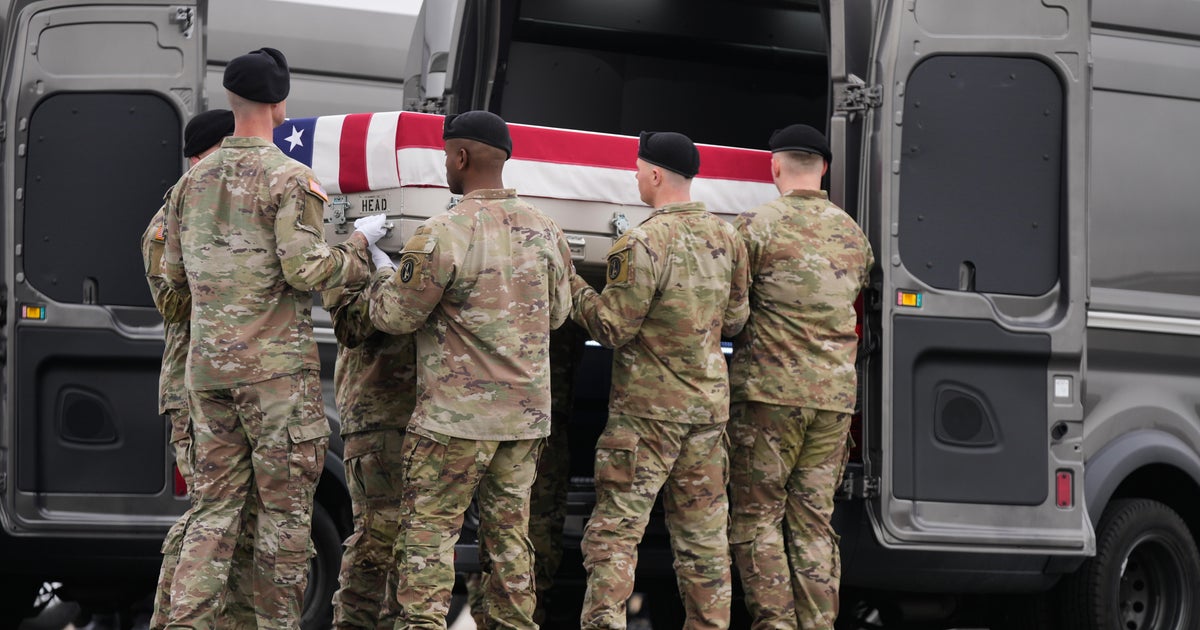
An Iranian drone strike on March 1 killed six U.S. service members and left dozens hospitalized with brain trauma, burns and shrapnel wounds.
 CBS News
Dozens of U.S. service members in Kuwait suffered serious injuries, including burns, brain trauma and shrapnel wounds, sources say
 Raw Story
Iranian strike wounded more troops than Trump admin let on

 The Post Millennial
140 US troops injured in Iran war so far: Pentagon

 Daily Beast
Jaw-Dropping Scale of Troops Wounded by Trump’s War Is Leaked

 Daily Caller
Dozens Of US Soldiers Severely Wounded In Kuwait, 1 Limb Amputation: Report
Overview
Multiple sources said an Iranian drone strike on a tactical operations center at Shuaiba port on March 1 killed six U.S. service members and left dozens with brain trauma, burns and shrapnel wounds.
The strike followed U.S. and Israeli strikes that began on Feb. 28, which sources said marked the start of Operation Enduring Freedom.
Pentagon spokesman Sean Parnell said roughly 140 American service members had been injured, that 108 had returned to duty and that eight remained listed as severely injured.
Sources said more than 30 service members remained hospitalized, including one at Brooke, 12 at Walter Reed and about 25 at Landstuhl, and roughly 20 were flown to Landstuhl on a C-17 with 'urgent' injuries.
More than 100 medical personnel were sent to Landstuhl to assist the wounded, two missing service members were later found under rubble, and Pentagon spokespeople did not respond to questions about the injuries.
Analysis
Center-leaning sources emphasize the attack’s severity by using vivid descriptors ("grim and chaotic"), privileging multiple anonymous medical and military sources over official Pentagon statements, and juxtaposing dramatic casualty details with brief official reassurances. Structural choices — leading with injuries, hospital lists, and casualty counts while omitting Iranian perspective — amplify underreported harm.
FAQ
Operation Epic Fury was a major joint US and Israeli military campaign against Iran that began on February 28, 2026[1]. According to US President Donald Trump, it was described as "a massive and ongoing" campaign targeting Iran's nuclear, missile, and naval capabilities[1]. The operation followed failed nuclear talks in Geneva and was based on perceptions that the Iranian regime was at its weakest point since 1979, facing economic stagnation and internal instability[1]. Rather than pursuing full regime change through invasion and occupation like in Iraq or Afghanistan, the US and Israel appeared focused on dismantling Iran's weapons arsenal, including its nuclear program, missile systems, and drone capabilities[2].
Iran responded quickly to Operation Epic Fury by attacking US bases and Israel in the region[1]. The March 1 Iranian drone strike on the Shuaiba port tactical operations center in Kuwait resulted in significant American casualties, killing six US service members and severely wounding dozens of others with brain trauma, burns, and shrapnel injuries[1]. This escalation demonstrated Iran's capability and willingness to retaliate militarily against the joint US-Israeli operation.
The Iranian drone strike on March 1 at Shuaiba port killed six US service members and injured approximately 140 American service members in total. Of these injured, 108 had returned to duty, while eight remained listed as severely injured and more than 30 remained hospitalized across multiple facilities, including Walter Reed Medical Center and Landstuhl Regional Medical Center in Germany[1]. The injuries included brain trauma, burns, and shrapnel wounds requiring extensive medical treatment by over 100 medical personnel.
According to US officials, the operation was not aimed at regime change through invasion and occupation as occurred in Iraq and Afghanistan[2]. Secretary of Defense Pete Hegseth refused to rule out ground operations, but there were no US troops inside Iran at the time of the operation[2]. Instead, the US and Israel focused on depriving Iran of its weapons arsenal—removing its ability to threaten external targets through its nuclear program, missiles, drones, and naval capabilities[2]. President Trump indicated willingness to accept a version of the current Iranian regime under new leadership if it agreed to dismantle its nuclear and missile programs[2].
The US and Israel launched the strikes based on the convergence of multiple factors. Failed nuclear negotiations with Iran in Geneva the previous week removed a diplomatic pathway[1]. Critically, both the US and Israel perceived the Iranian regime to be at its weakest point since its 1979 founding, with stagnant economic conditions and increasing internal brutality suggesting a state forced to resort to extreme violence to maintain control[1]. Trump also used the strikes as an opportunity to call on the Iranian people to overthrow the regime, framing it as "the moment for action" and threatening the Islamic Revolutionary Guard Corps (IRGC) and other security forces with "certain death" if they did not lay down their arms[1].