Iran Fires Missiles Toward Diego Garcia, Raising Range Questions
Iran launched two intermediate-range ballistic missiles toward Diego Garcia; neither struck the base and one reportedly failed while a U.S. warship fired an SM-3 interceptor.
 PJ Media
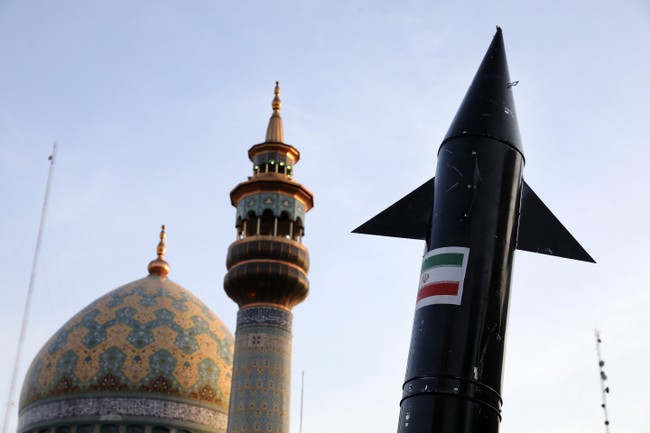
Iranian Ballistic Missiles Unsuccessfully Attack American Airbase At Diego Garcia

 CNN
CNNIran launched missiles at US-UK military base in the Indian Ocean. Here’s what that says about its capabilities | CNN Politics
 FOX News
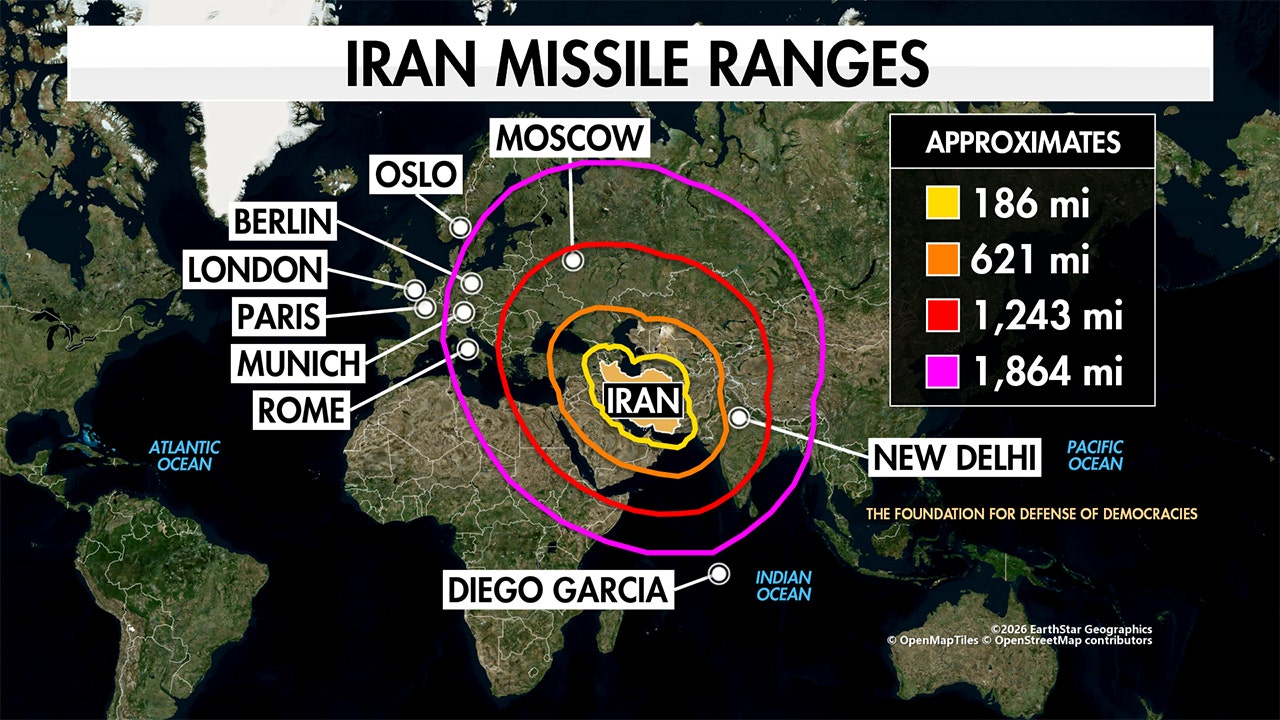
Trump proven right on Iran's long-range missile capability as regime targets US-UK base, experts say
 Townhall
Shocker: Iran Lied About Not Having Intermediate-Range Missiles
Overview
U.S. officials said Iran launched two intermediate-range ballistic missiles toward the U.K.-U.S. base on Diego Garcia, with neither striking the base and one missile failing while a U.S. warship fired an SM-3 interceptor.
Diego Garcia hosts about 2,500 mostly American personnel and supports U.S. strategic operations, making the attempted strike significant, the U.K. Ministry of Defense said.
The U.K. condemned "Iran's reckless attacks" and Iranian Foreign Minister Abbas Araghchi warned that allowing U.K. bases risks British lives, while analysts said the strike raises questions about Tehran's missile range.
Iran previously said it limited missile range to about 2,000 kilometers (roughly 1,240 to 1,250 miles), while Diego Garcia lies about 2,360 to 2,500 miles from Iran, prompting debate over Tehran's true reach.
Officials said it was unclear whether the SM-3 interception succeeded, and analysts and officials said the strike could prompt European hosts to reconsider basing arrangements and spurs further intelligence and weapons investigations.
Analysis
Center-leaning sources are largely neutral, presenting multiple perspectives and factual context without loaded editorial language; they quote U.K. condemnation alongside Iran's rebuttal, include technical missile-range analysis, and give historical and legal context about the Chagos dispute, balancing security details with human-rights and political angles.
FAQ
Diego Garcia is strategically vital because it serves as a major hub for U.S. military operations across the Middle East, South Asia, and East Africa. Located in the central Indian Ocean approximately 3,000 kilometers from key strategic chokepoints like the Bab-el-Mandeb Strait and Malacca Strait, the base hosts long runways capable of accommodating strategic bombers including B-52s and B-2 Spirit aircraft, a deep-water port for naval vessels including submarines and aircraft carriers, and pre-positioned military equipment and fuel supplies.[1][4][5] The base has historically supported major U.S. military campaigns including the 1991 Gulf War, 2003 Iraq War, 2001 Afghanistan operations, and recent 2025 strikes against Houthis in Yemen, making it what the U.S. has described as "an all but indispensable platform" for regional security operations.
The attack demonstrates that Iran possesses missile capabilities significantly exceeding previously estimated ranges. Iran has officially stated its missiles have a 2,000-kilometer range, yet Diego Garcia lies approximately 2,360 to 2,500 miles (3,800 to 4,000 kilometers) from Iran's coastline.[1][7] Analysts had previously estimated Iran's longest-range weapon, the Khorramshahr 4 missile, could reach only 1,200 to 1,900 miles away, making the successful launch toward Diego Garcia evidence of greater technical capability than Western intelligence assessments had indicated.[7] This revelation raises concerns about the true extent of Iran's ballistic missile program and poses significant implications for regional security planning.
The United Kingdom recently agreed to transfer sovereignty of the Chagos Islands to Mauritius while retaining long-term access to Diego Garcia under a 99-year lease arrangement.[2][8] This deal was necessary to guarantee the future of the base following a 2019 International Court of Justice advisory ruling that backed Mauritian claims to sovereignty over the islands.[7] U.S. President Donald Trump has characterized the agreement as "a good deal" because it guarantees continued operational security for both U.S. and UK forces while avoiding a potentially damaging legal defeat that could have jeopardized Western access to this critical strategic installation.[8] The arrangement ensures Diego Garcia remains operational as a linchpin in America's global military posture despite the territorial transfer.
The United Kingdom granted the United States permission to conduct "defensive bombing missions" from Diego Garcia and from RAF Fairford in Gloucestershire, with some strikes already launched from the latter location.[1] However, the UK refused American use of the RAF Akrotiri base in Cyprus for offensive operations, demonstrating a clear diplomatic boundary around its military support.[1] This distinction between defensive and offensive operations reflects British efforts to balance its strategic partnership with the United States while managing potential political and security risks.
The attack could prompt European nations hosting U.S. military bases to reconsider their basing arrangements, as Iran's demonstration of extended missile range raises security concerns for allied nations.[1] Additionally, the incident will likely spur further intelligence investigations into Iran's weapons capabilities and operational intentions, while potentially prompting NATO allies and partner nations to reassess the risks associated with providing access to bases used for U.S. military operations.[1] Iranian Foreign Minister Abbas Araghchi warned that allowing UK bases to be used for such operations risks British lives, indicating that the strike may escalate regional tensions and diplomatic friction between Iran and Western powers.[1]
